Colorado State Flag Symbolism & Meaning: A Journey Through Time
The Colorado state flag, a seemingly simple design of blue, white, and blue stripes crowned with a red "C" encircling a golden disc, holds a rich and surprisingly complex history. Adopted in 1911, Andrew Carlisle Carson's creation immediately sparked conversations—not about its beauty, but about its meaning. What did the colors and symbols truly represent? The initial lack of precise specifications only fueled the mystery, a mystery that continues to fascinate Coloradans today. This isn't just a story of cloth and dye; it's a narrative of evolving identity, legislative battles, and the ongoing quest to define what it means to be a Coloradan. For a deeper dive into the flag's history, check out this detailed resource.
Did you know that the original design lacked precise details regarding color shades and proportions? This ambiguity, while seemingly minor, significantly impacted how the flag was perceived and represented across the state. This initial vagueness fueled ongoing debates and reinterpretations, highlighting the flag's capacity to evolve with the state itself.
Cracking the Code: Mountains, Mines, and a Possible Flower?
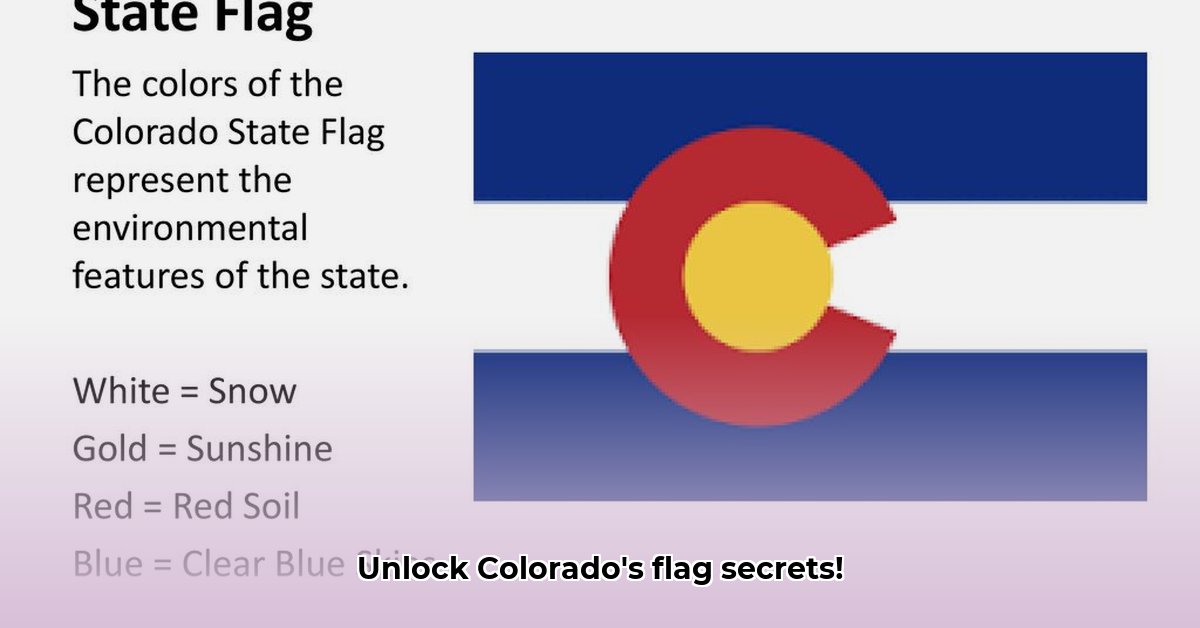
Most interpretations agree that the flag's colors reflect Colorado's breathtaking landscape: the deep blue of the sky, the pristine white of snow-capped peaks, and the vast plains below. The bold red "C," often interpreted as a simple initial for "Colorado," has also spurred creative interpretations—could it subtly represent the state flower, the columbine? The golden disc, a common interpretation points towards the invaluable contributions of Colorado's mining history, a golden symbol of past prosperity. But, is there more to this seemingly simple imagery? The very ambiguity of these symbols gives further weight to the ongoing discussion surrounding the flag's true meaning.
The "C" Question: A Symbol of Many Interpretations
That central "C" remains a fascinating point of contention. Is it merely an initial? A stylized columbine? Or something more metaphorical, representing the circular, interconnected nature of Colorado's identity? This very ambiguity, some argue, mirrors the ever-evolving complexity of Colorado itself – a dynamic blend of rugged landscapes, a pioneering spirit, and a thriving modern state. This very lack of a single definitive answer adds to its intrigue and enduring relevance.
“The ambiguity of the 'C' is precisely what makes it so powerful,” explains Dr. Eleanor Vance, Professor of History at the University of Denver. “It allows each Coloradan to find their own personal connection, their own interpretation within the symbol.”
Did you know that multiple attempts were made to standardize the design following its initial adoption? These official amendments, such as those in 1929 and 1964, aimed to resolve the inconsistencies through standardization of color and size. This was an important step in creating a definitive visual that would unite the state under a single, commonly-understood representation.
From Ambiguity to Standardization: Amendments and Clarifications
The initial lack of detail led to inconsistencies in the flag's appearance across the state. Official clarifications in 1929 and 1964 attempted to address this by standardizing colors and proportions. These revisions, however, didn't entirely quell the ongoing debate regarding symbolic interpretations. The very need for these amendments acts as a testament to the living, breathing nature of the flag, adapting to the times, while striving to represent its people and their heritage.
Beyond the Fabric: Public Opinion and the Everlasting Conversation
Despite these clarifications, the Colorado flag continues to spark discussion. The North American Vexillological Association’s ranking of the flag (relatively low on their list) highlights the need for further consideration. However, such rankings aren't conclusive judgements, particularly given the depth of sentiment that the flag evokes among the population of Colorado. Is its symbolic richness a strength, or does it hinder its visual effectiveness? What constitutes a truly "effective" state flag, and how do we balance tradition, symbolism, and aesthetic appeal?
"A flag's effectiveness stems not only from its visual clarity, but also from the emotional resonance it carries," adds Dr. Michael Davis, Associate Professor of Art History at Colorado State University. "The Colorado flag, through its very ambiguity, manages to capture a wide spectrum of perspectives".
A Timeline of the Colorado Flag
| Year | Event | Significance |
|---|---|---|
| 1907 | First Colorado state flag adopted | Short-lived; ultimately deemed inadequate, highlighting the need for a more effective and representative design. |
| 1911 | Carson's design adopted | The iconic design we know today was born, although its symbolic meaning was initially vague. |
| 1929 | First amendment clarifying the design | Addressed inconsistencies in color and size for a more consistent representation across the state. |
| 1964 | Second amendment further standardizes the flag | Refined the design specifications even further, aiming at near-perfect uniformity of representation. |
Shaping the Future: A Call for Dialogue and Potential Refinements
The ongoing dialogue surrounding the Colorado state flag presents opportunities for increased engagement. Public forums could re-examine the flag's design, potentially refining certain aspects without altering its core symbolism. Simultaneously, educational initiatives could deepen public understanding and appreciation for the intricacies of the flag's history, and its evolving significance to Colorado's identity.
The story of the Colorado state flag is a testament to the dynamic nature of state identity and the enduring power of symbolism. It is a story that continues to evolve, reflecting the ever-changing landscape of Colorado, and the ongoing dialogue surrounding its representation.